Previous blogs have talked about the mission of Unite for Rights and the architecture for carrying out that mission. This one describes the philosophical foundation upon which the mission and architecture rest.
Unite for Rights puts our social contract, our agreement as to how we will live together on this magnificent planet, into writing.
Today, after thousands of years, humans have an understanding of rules which they live by together. We are not born with rules, we are born without them. But for the sake of security, and personal as well as social advancement, we reach agreements so that we may live in peace with well-being, or at least have the means to resolve disputes through law rather than war, and provide for a decent, if unequal, life for all.
We call these agreements laws, whether they are created in a town, city, state, nation, or internationally. Law is an agreement to live together at each of these levels.
Law, like physics or psychology, is not fixed; it’s a continuum. Newton’s theories were thought to be absolute until Einstein proved him wrong. So too with our social contract. Though some may claim agreements embodied in law absolute, they are not. Law, like physics, is evolutionary.
The question, then, is what evolutionary path do we take to further develop our social contract, our agreement to live together, at the international level? And how do we make it enforceable for those who govern in all countries?
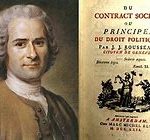 Jean Jacques Rousseau, a Swiss/French philosopher, in his famous book Social Contract (1762) said that it is for us, the people, to write the rules for those who govern: “The people build the machine, the Prince merely operates it.” A Bill of Rights, at any level, is the machine.
But what rules do we include, and how do we pick them? Another philosopher, John Rawls, a leading thinker in political philosophy, elaborated on the social contract two centuries after Rousseau, with three masterworks: A Theory of Justice, Political Liberalism and The Law of Peoples.
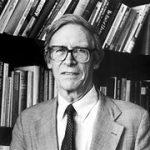 Rawls suggested that in order to choose rights, it is important to think from the perspective of a person who could come out into the world in any place, in any country.
He called the application of this screen “the veil of ignorance.” When the veil is applied it is unlikely that those choosing rights would construct a social contract whereby 80% of the people on Earth are living on less than $10 US dollars a day. Nor would they accept widespread limitations on the ability to speak their minds about those who govern, realizing that they are giving up their personal liberty to tyranny.
Unite for Rights applies this philosophical thinking in our “drafting through dialogue” process. SAYING “BUT COUNTRY X WILL NOT ACCEPT THIS” IS NEVER AN APPOSITE COMMENT WHEN ENGAGED IN THE DRAFTING THROUGH DIALOGUE PROCESS. There is a draft International Bill of Rights on our Unite for Rights website. With Rousseau and Rawls in mind, Unite asks you to help edit this Bill of Rights assuming that you could emerge any place, in any country, so that it can become a social contract for those who govern in all countries, and for us as citizens in our interactions with one another.
The deal is we give representatives the power to govern only when they agree in return that we get a certain set of rights. As we make this list of rights, let’s not think from a myopic view of our own particular circumstances, but from a view for all humanity. As author Paulo Coelho conveyed in “The Alchemist”: “When you conspire on behalf of the world, the world conspires on behalf of you.”
A simple rule of thumb is that when a child is born, wherever that child may be, the rest of us clap, and welcome them into a social contract which provides for a good life on Earth, including rules upon anyone who may govern them.
The philosophy of Unite for Rights is not wishful thinking, it also contains process. After the end of World War I, having personally seen the atrocities of conflicts among nation states, Eleanor Roosevelt spoke out publicly in favor of a “World Court” that could resolve disputes between nations to provide for judicial resolution of inevitable disputes.
After World War II, Eleanor, with Rene Cassin (who also supported a World Court after WWI, where he was maimed in battle) revisited the idea of rights enforceable in courts, this time embodying it in the Universal Declaration of Human Rights, and later in the European Court of Human Rights.
 A political philosopher with whom I studied, Burleigh Wilkins, wrote about the expansion of Regional Courts such as the European Court of Human Rights to form an intertwined array of courts that could be reviewed by an International Court of Human Rights. This map captures such a regional court structure:
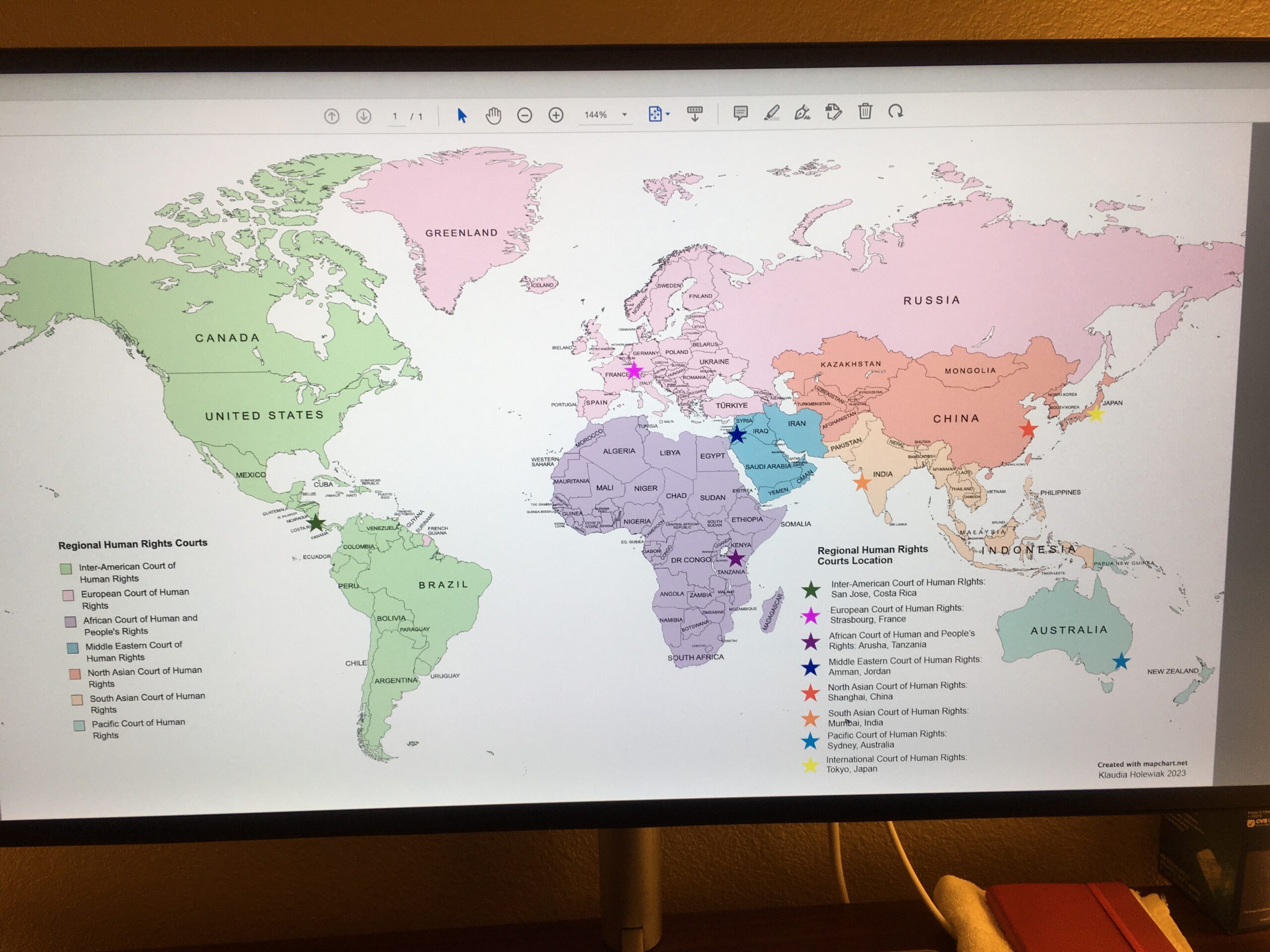 Burleigh blended the philosophy of social contract with the application of enforceable law.
Few have understood better the evolutionary process of human rights into legal rights, enforceable in courts of law, than Frank Newman, the former Dean of the University of California, Berkeley, School of law. I had the good fortune to study with Frank as a law student, and he later was my mentor for my LL.M.
 Frank had a specific benchmark for me as I embarked on my LL.M. He made me promise to “make human rights juridical,” that is enforceable in courts of law. Frank had also served as a Justice on the California Supreme Court before leaving it to return to Berkeley Law and his work to make human rights “juridical,” not just in California, or the U.S., but internationally.
At Unite for Rights, you have the juncture of social contract theory with enforceable law. A symbiotic relationship in which one is insufficient without the other, and in combination follows the directive of Eleanor Roosevelt that “we must do the thing we think we cannot do,” make human rights enforceable in the courts of all countries, with Regional Courts to provide review when domestic courts fail, so that rights become “fully realized” in accordance with Article 28 of the UDHR.
There were concerns expressed at the time of the drafting of the UDHR. One of the leading legal scholars of the day, Hersh Lauterpacht, expressed his concern that the UDHR would give a false impression that it was law, when it was not. 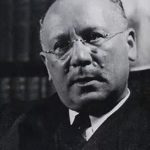 He thought that a situation would emerge whereby the UDHR would be proclaimed, yet remain unenforceable, or that academics would claim it was enforceable, but Judges would refuse to apply it in cases: that is what has happened.
It’s time to admit that Lauterpacht was right. It is not admitting failure, but rather provides a guide, both philosophical and practical, for our next steps to take.
 This “leveling up” is evident with people throughout Europe, be they in Germany, Spain, Denmark or Italy. From a young age, people in 47 different countries are taught that they have a shared identity as Europeans, as well as their national identity. This sense of shared identity is empowering: it provides the open-mindedness needed for finding the rights that the people in all of these 47 countries have in common: protecting the environment, nondiscrimination, freedom of speech, democracy, freedom of religion and many other core values.
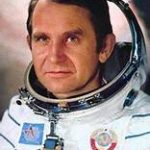 In the early stages of space travel a Russian cosmonaut, Oleg Makarov, shared this perspective with us. As he looked out the porthole of his space capsule, he had a camera in hand and he was hanging in the orbital module preparing to take a picture. As he trained the camera upon Earth, he said: “it looked like a map.” He explained, “when the porthole is pointing straight down on the ground, you can’t see the horizon, and so you get the impression that you are watching a map glide by beneath you…unconsciously you look for the lines that are on such maps, but they are not there.”
 The third or fourth day we were pointing to our continents. By the fifth day we were aware of only one Earth.”
 Margaret Mead provides us a starting point. She famously said “Never underestimate the power of a small group of dedicated people to change the world, indeed it’s the only way that change has occurred.”
  The book, Humankind, debunks this myth. It presents evidence that homosapiens have not always been at war. Recent writing by Yuval Noah Harari confirms this as well. Homosapiens have become the dominate species on Earth not because of war, but because of the ability to collaborate.
 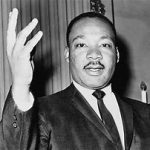 When confronted with the unwillingness of people to discard the old worn out myths such as “war is just the best we can do,” and bring in the new, an integrated, international community, Dr. Martin Luther King said “people make better taillights than headlights.” Be a leader; be a headlight, others will follow you.
 It’s time to trek together upstream.
 Can philanthropy help re-write our social contract so that many of the problems philanthropy addresses can be eliminated, or reduced, so they are not as prevalent?
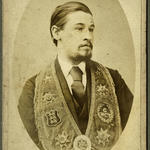 Joseph Malins in 1895.
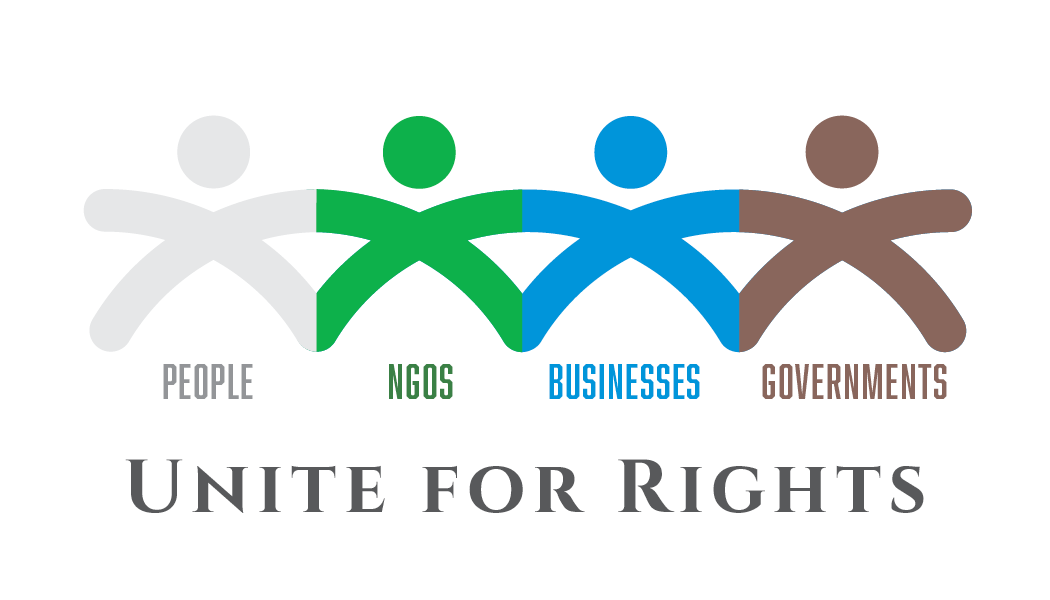 gray for people, green for nonprofit organizations, blue for businesses, and brown for governments
 We can build this together.

 Our ability to read and write gives us the means to change; it’s love that gives us the power. Great leaders love others as they love themselves. Eleanor Roosevelt loved people – all of them. Same with Gandhi, King, Mandela, and this is true throughout the arts, as Lenny Kravitz sings, we are “Here to Love.”
 In so doing, we accomplish what is best for ourselves, as well as those with whom we share Earth. When we love each other, we all prosper. The love you give to others they give back to you. To paraphrase Paul Coelho in the The Alchemist, “When you conspire on behalf of the world, the world conspires on behalf of you.” So it is with Unite for Rights and an International Bill of Rights.
 “The tightest chains that bind us are those that we place upon ourselves.”
 These nation-state lines are fabrications, as astronauts continue to tell us who have experienced the “Overview Effect”: the lines of countries do not exist from space – we’ve created them. For the purposes of evolving as a species and into a international community, while keeping the cultural and historic traditions of nation-states is important, even as we associate ourselves with particular nations, we need to think about what is optimum for all of humanity.
  Recent discussions about a Bill of Rights as part of new draft Constitution for Chile show that what is most important is participation, not position, and a broad portion of society wants to particpate in drafting the rules for those who govern.
 Socrates did not have this problem; nor did Rene Cassin (French), John Humphrey (Canadian), Eleanor Roosevelt (American), P.C. Chang (Chinese) or Charles Malik (Lebanese), some of the framers of the Universal Declaration of Human Rights.

Follow Us!