War again! Having just returned to the U.S. from Poland and talking with people from Bucha where Putin used cluster bombs over civilian residences and then bombed the hospitals after they went to remove the shrapnel stuck in them, the most common comment I hear is “I can’t believe what Putin is doing.” Believe it. It’s no surprise; it’s a repeat.

After WWI, Eleanor Roosevelt argued strenuously that we needed to have a World Court based on fundamental rights to prevent despots from seizing control and waging war. Unfortunately, political forces, including in the US, prevented this from happening. Then came Hitler.
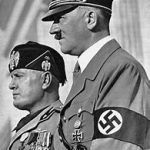
After 60 million killed, Eleanor again tried to empower humans to restrain despots through the Universal Declaration of Human Rights. Again, it hasn’t worked. It’s not her fault, it’s our fault. As much as human rights organizations trumpet the UDHR, it has not been sufficiently implemented, it lacks the power of law. Incremental efforts have been insufficient – hence we have another war.
This is not to say that incrementalism has been worthless. It has cultivated the ground to where people internationally are unwilling to live under despots, as the Ukrainians are courageously showing the rest of us. We must arm them and support them. Putin’s outdated authoritarian view of the world must be thwarted, even if it means using heavy military to stop him.
But we must also plan for the peace. Eleanor and others did this long before the end of WWII. They called for and worked for an “International Bill of Rights,” enforceable in the courts of all countries. It’s time to look back to see our way forward. There will always be brutes and despots. The only way, even in democracies, to be free of authoritarian rule is if there are independent courts and judges, with the power to enforce a Bill of Rights.
So if you don’t like the war, stop saying you don’t believe it and act. That’s what Eleanor did. Continue her movement by becoming a “light for rights” on this website showing the world that you support the Universal Declaration of Human Rights, Eleanor’s greatest accomplish, with others, on its 75th anniversary.

Fight war; fight despotism; take 30 seconds to join with others. Be a light for rights!
 Today is International Day for Peace. A worthy day and effort, but how do we achieve it? Eleanor said “It isn’t enough to talk about peace. One must believe in it. And it isn’t enough to believe in it. One must work at it.”
 David Brooks has written insightfully in “Second Mountain” that our hyper individualism is not serving us well. To be sure, individual efforts are to be applauded, organizations too. These individual acts have prepared us for this moment when we can do something collectively.
 On this day of peace, the President of South Korea told the United Nations General Assembly that it is time for us “to become an international community.”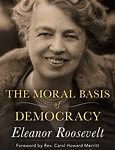
 There is a genuine danger between the connection of populism and athoritarianism. Our human traits as primates make us suceptible to the seeming security of the dominant ape. We must resist this outdated false sense of security and efficiency – it may be more work, but it’s a better result when we pick our leaders through a democratic process, not have them foisted upon us based on herediary background or religious beliefs. We are our own rulers.
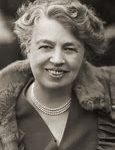 As a facilitator for a movement started by Eleanor and others, Eleanor Lives! is not judgmental: we offer a coalition of everyone. As Eleanor said: “We all go ahead together, or we all go down together.”
 Buckminster Fuller, one of the great thought leaders of the 20th century, liked to think of himself as a “trimtab,” the small piece on the rudder of a huge ship that can help it steer and change direction.
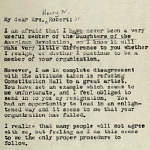 Eleanor was a DAR member at that time, but she was not personally associated with either this rule or decision. Even so, guided by her conscience Eleanor injected herself into the situation by condemning the action and resigning in protest, stating in part: “[F]eeling as I do this seems to me the only proper procedure to follow.”
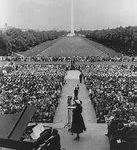 The story culminates on Easter Sunday of that year (April 9, 1939) when Anderson, acting upon an invitation from the U.S. federal government, performed at the Lincoln Memorial before an audience of 75,000 people. This story is one of many from Eleanor’s life that offers a good example of the power of acting on one’s conscience.

Follow Us!